
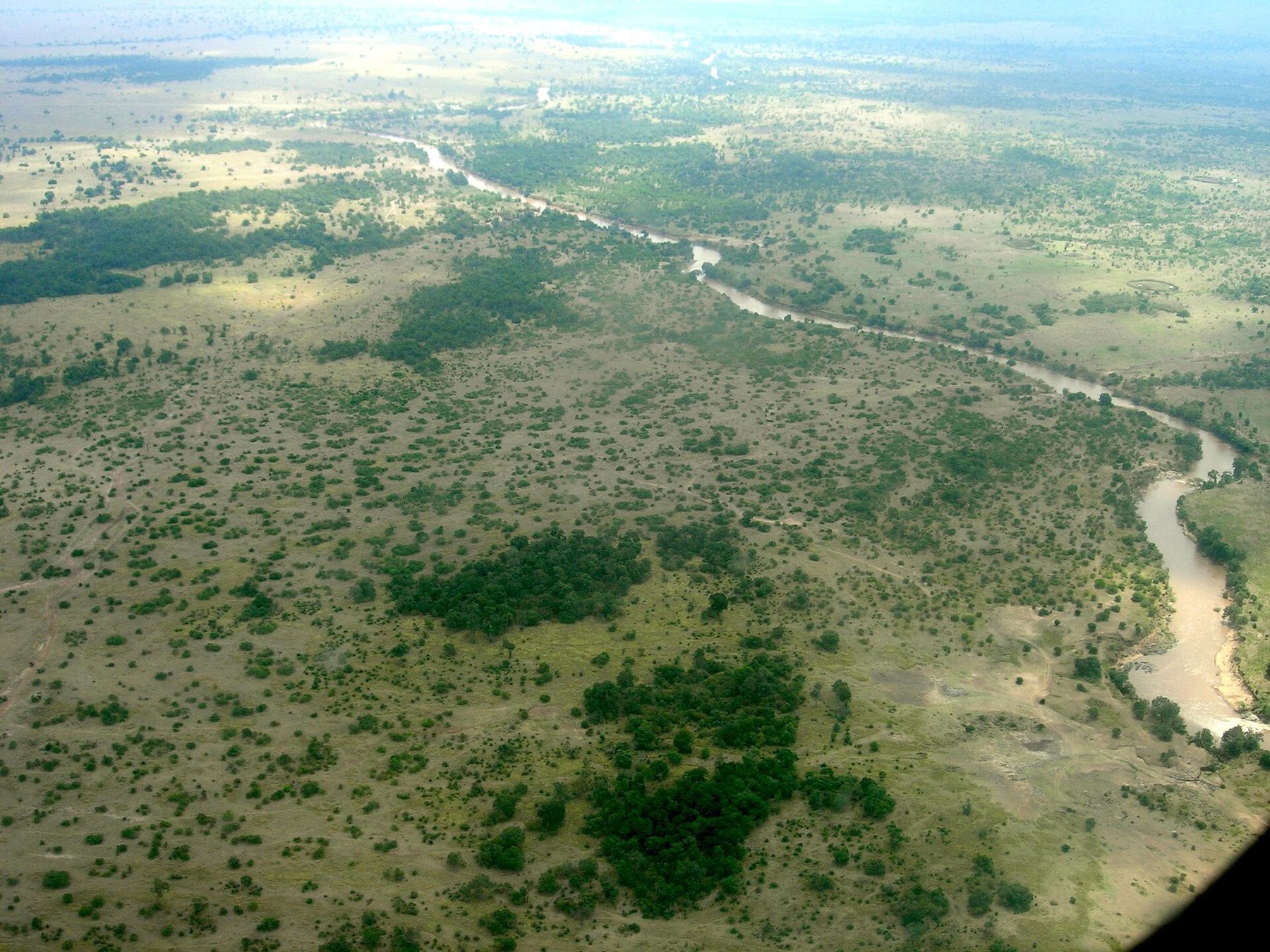
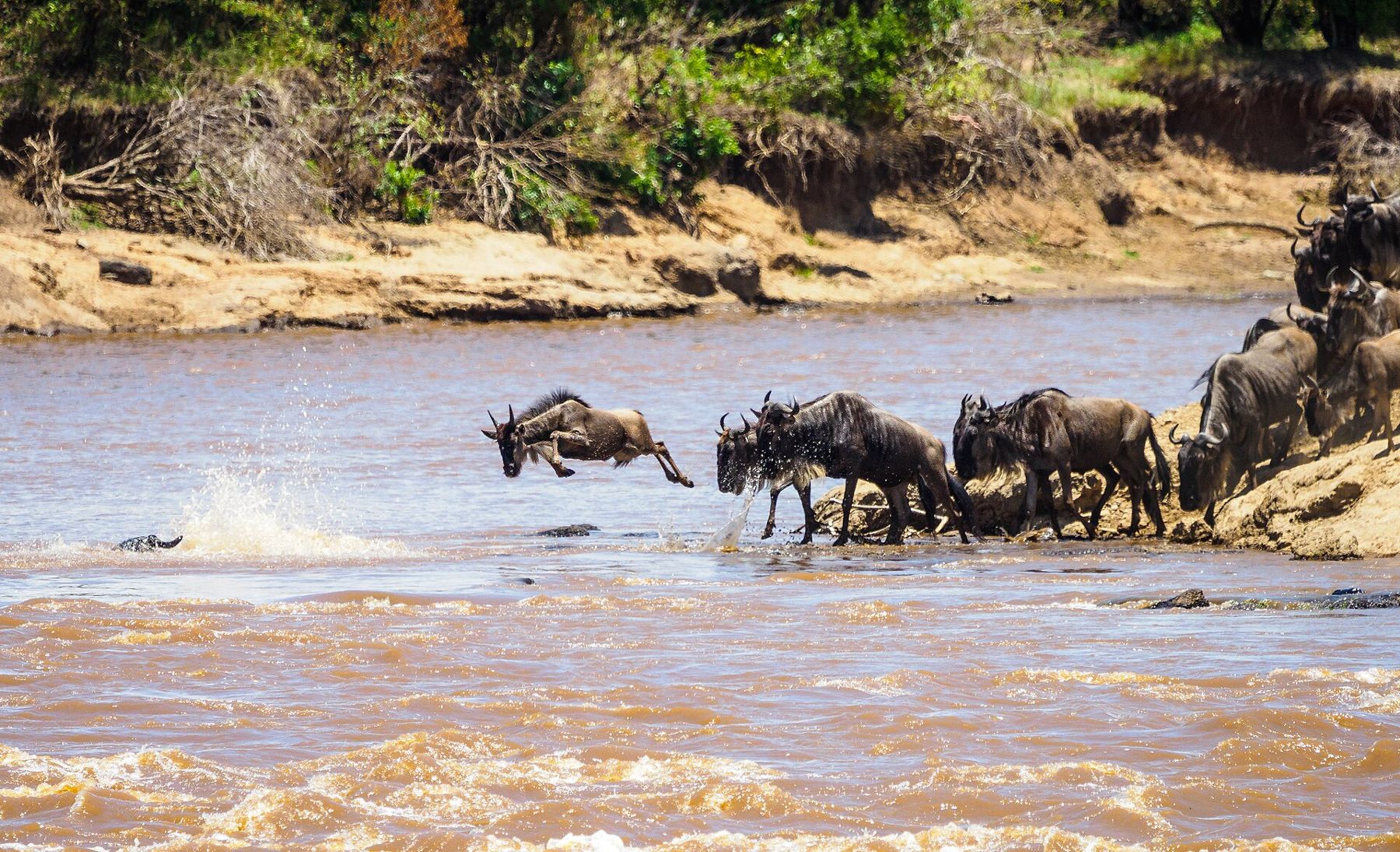
Most pictures of the Mara show one moment: wildebeest pouring down a riverbank while crocodiles wait below. It is real, and it is worth seeing, but it is a small part of the place. For most of the year, and for most of each day even in crossing season, the Mara is a wide rolling grassland where lions sleep through the heat, topi stand on termite mounds, and Maasai herders move cattle across land their families have grazed for generations.
This guide covers how the area fits together, when the migration tends to arrive, how to watch the big cats well, and the rules that keep the place working.
Reserve and conservancies
The core of the area is the Maasai Mara National Reserve, roughly 1,500 square kilometres of grassland in the far south-west of Kenya, running down to the Tanzanian border where it meets the Serengeti. Unlike Kenya's national parks, the reserve is not run by the Kenya Wildlife Service. It belongs to Narok County, and the Mara Triangle, the wedge of land west of the Mara River beneath the Oloololo Escarpment, is managed separately on the county's behalf. Entry fees and rules can differ between the two parts.
Around the reserve's northern and eastern edges lies a ring of community conservancies. These are areas of private Maasai land that families lease for conservation, pooling their plots so wildlife can move freely and tourism pays a rent. Names such as Mara North, Naboisho and Olare Motorogi appear on maps. The conservancies generally limit how many visitors and vehicles they allow, and many permit things the reserve does not, such as guided walks and night drives with conservancy rangers. Each sets its own rules and fees.
The result is a landscape with no sharp edge between protected area and home. Lions hunt on conservancy land, cattle graze near the reserve boundary, and money from visitors is part of what keeps land open for wildlife rather than fenced for farming.
The migration months
Each year well over a million wildebeest, with hundreds of thousands of zebras and gazelles, follow the rain and fresh grass in a long loop through the Serengeti and the Mara. The herds usually reach the Kenyan side some time around July and stay into September or October, before heading south again as the short rains begin. That is the pattern, not a timetable. In some years the first columns arrive in late June; in others they hang back in Tanzania until August, or split, with some herds crossing back and forth over the border for weeks.
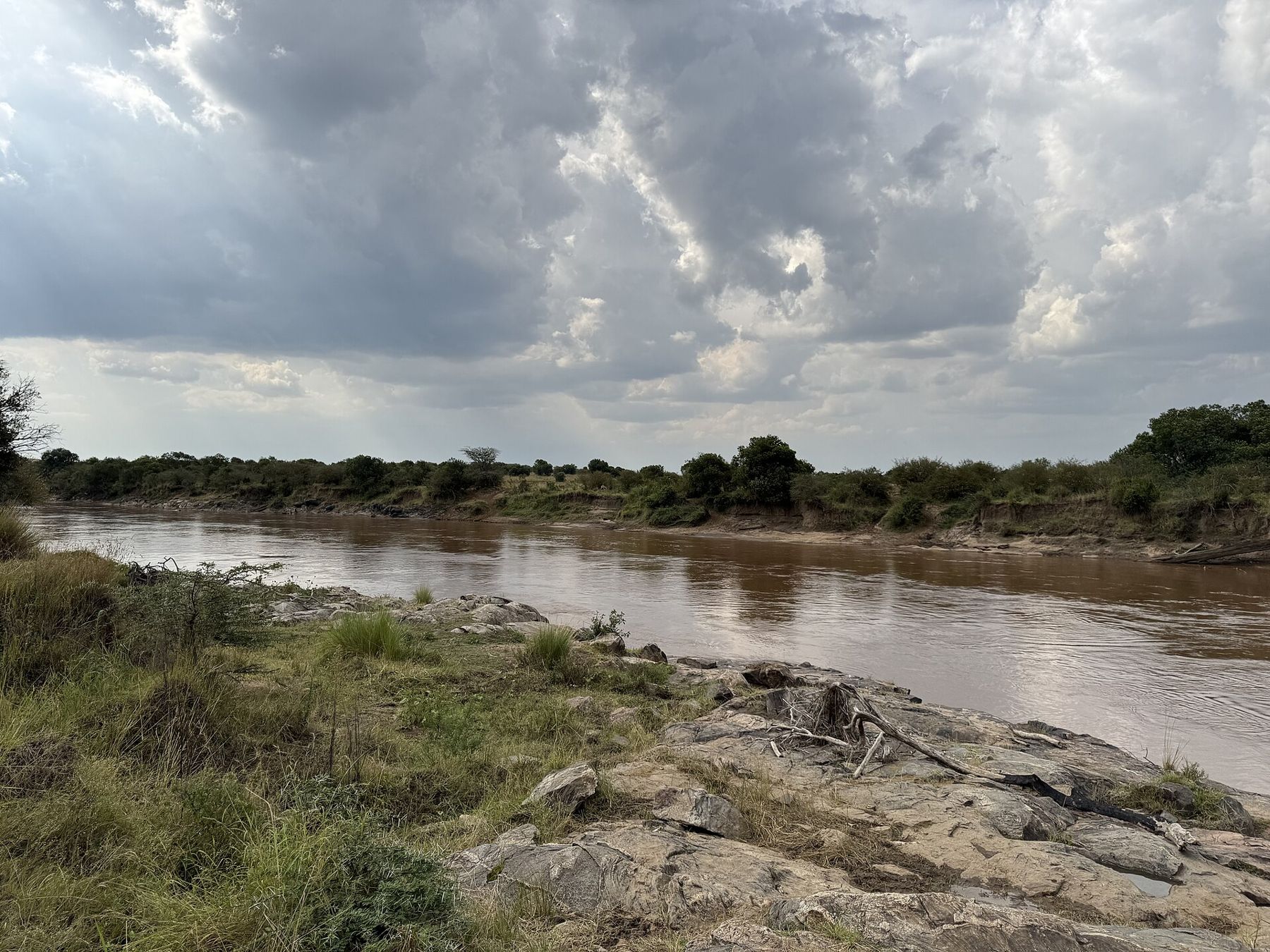
The river crossings themselves are unpredictable. Herds can gather on a bank for hours and then turn away. When a crossing does happen, dozens of vehicles may line the bank. Rangers increasingly control where vehicles may wait near crossing points, and a sensible driver keeps well back so the animals are not blocked from the water. Patience matters more than speed.
That is the pattern, not a timetable.
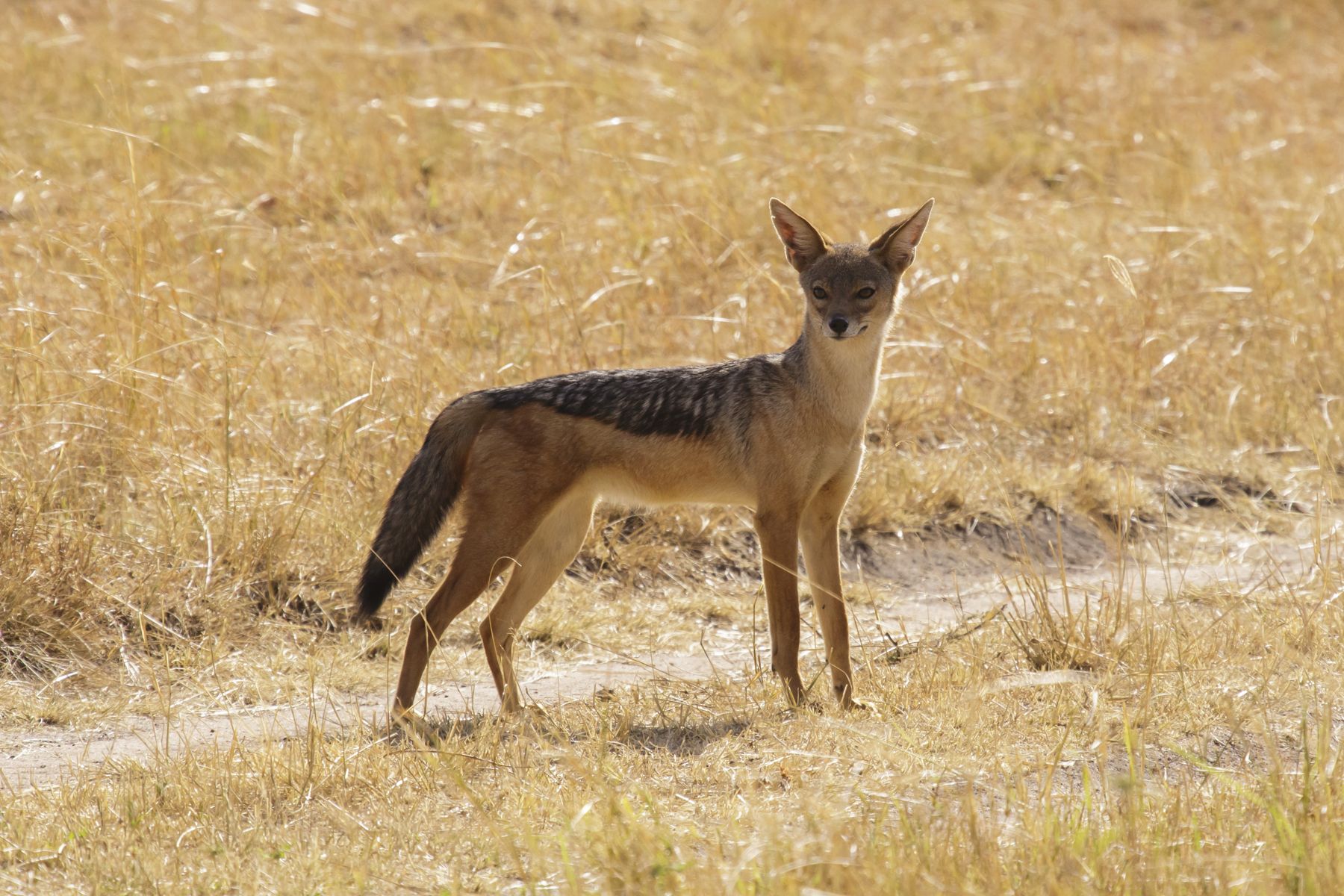
The rest of the year makes its own case. From November to June the resident herds of topi, zebra, impala, Thomson's gazelle, buffalo and elephant remain, and the predators stay with them. The long rains, roughly March to May, turn tracks to black cotton mud and close some routes, but the grass is green and visitors are fewer. Our page on the long and short rains covers the seasons in more detail.
Watching the big cats
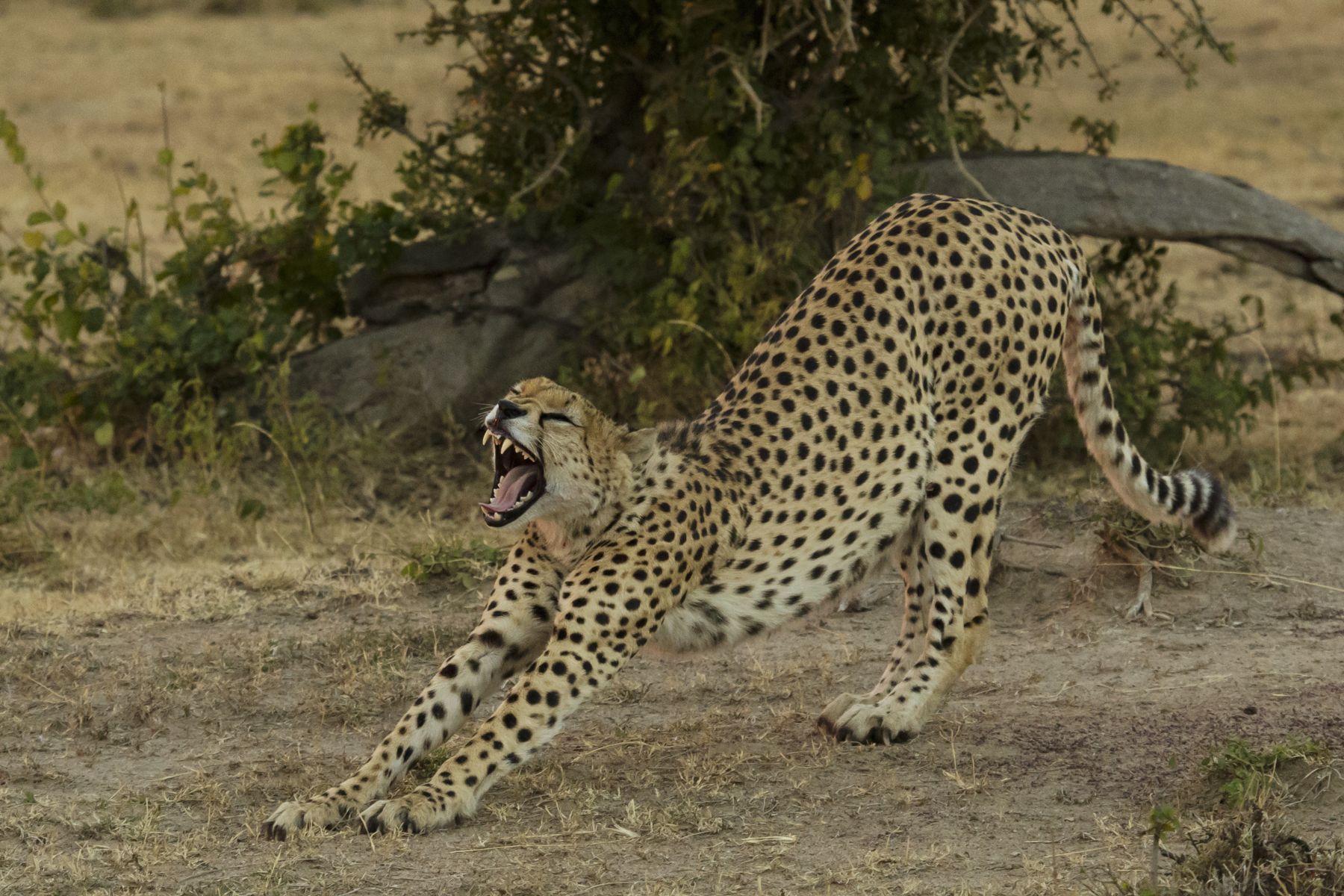
The Mara holds one of the densest lion populations in Africa, and many prides here have been followed by researchers for years. Lions spend most of the day asleep, so the best chance of seeing them move is in the first and last hours of light. Cheetahs hunt in daylight, using termite mounds and sometimes vehicle roofs as lookouts; the second is a habit drivers should not encourage. Leopards keep to the riverine forest along the Talek and Mara rivers and to rocky outcrops, and finding one usually takes time and luck.
Good cat watching is mostly about restraint. Switch off the engine when animals are close. Keep voices low. Do not ask a driver to move in closer to a hunting cheetah: a vehicle that cuts off a stalk can cost the animal a meal it badly needs, and a cheetah that fails too often loses condition. If a sighting draws a crowd, it is usually better to leave and come back later than to sit in a queue.
Maasai land and communities
The Mara is named for the Maasai, and the word mara, in the Maa language, describes the spotted look of the land, with trees, shrubs and cloud shadows scattered across the grass. Maasai families live throughout the area outside the reserve, and many work in conservation and tourism as rangers, guides, researchers and managers, alongside keeping cattle, sheep and goats.
The history is not simple. Much Maasai land was taken during the colonial period, and the creation of protected areas later restricted grazing on land that communities had long used. The conservancy model is partly an answer to that, giving landowners an income from wildlife, though debates continue over how fairly the money is shared and how grazing should be managed.
If you visit a village, go through an arrangement where the community sets the terms and keeps the fee. Ask before photographing anyone, accept a no, and treat homes as homes rather than as a show. Many visitors meet Maasai people mainly as guides and rangers, and conversations on a long drive are often the best way to understand the place.
Rules on vehicles and distance
Inside the reserve, vehicles must stay on established tracks. Off-road driving damages grass and soil, and in wet months leaves scars that last for years; it is banned except where rangers allow it, and fines can be heavy. Gate hours are set, and vehicles are generally expected to be at camp or out of the reserve after dark.
- Stay inside the vehicle unless you are at a designated spot.
- Keep a respectful distance and never surround an animal.
- Limit the time you spend at a crowded sighting.
- Never feed animals or throw food from the vehicle.
- Take all litter out with you.
It helps to talk about these rules with your driver before you set out. A driver who knows you would rather leave a crowded sighting than push closer will drive differently.
Planning the trip
The Mara lies roughly 270 kilometres west of Nairobi. The road goes via Narok, and the last stretches toward the gates can be slow and rough, especially after rain; allow most of a day. Small aircraft serve airstrips across the reserve and conservancies in about an hour. Many visitors combine the Mara with Lake Naivasha on the way, or with Lake Nakuru to the north.
Nights and early mornings are cool at this altitude, so pack a warm layer for dawn drives. Dust gets into everything in the dry months. Above all, give the place time: two or three full days lets you see the Mara as more than a single river crossing.