
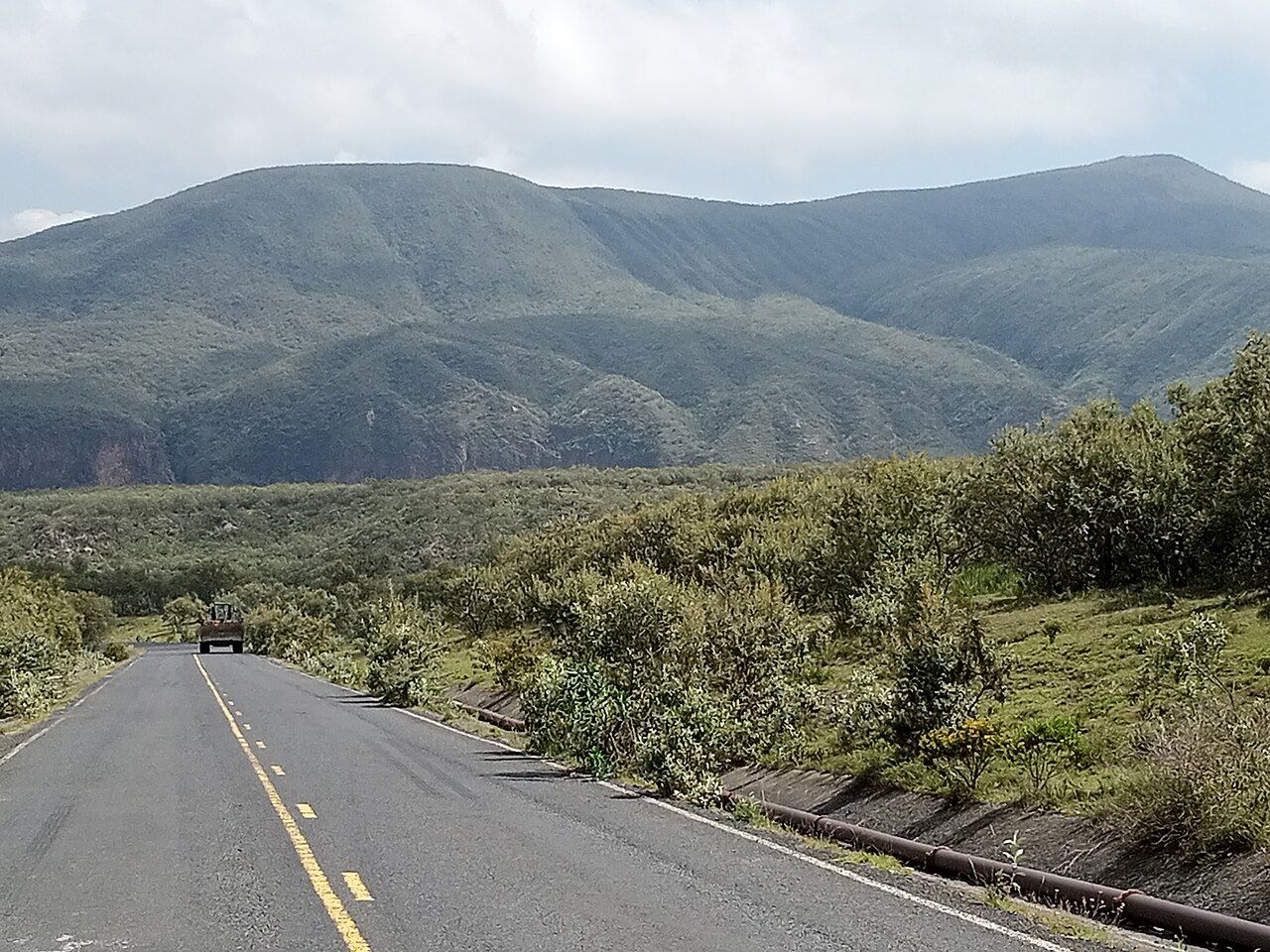
Naivasha is the Rift Valley at its most approachable. The lake lies about 90 kilometres north-west of Nairobi, a short drive down the escarpment, and the country around it is good for slowing down: a freshwater lake with hippos and fish eagles, and next door a small national park where walking and cycling are allowed.
A freshwater lake
At close to 1,900 metres, Naivasha is the highest of the main Rift Valley lakes in Kenya, and unlike its alkaline neighbours it is fresh. There is no visible outlet, but water seeps away underground, which keeps salts from building up. The name is usually traced to a Maa word for rough water, after the sudden storms that can whip up the surface in the afternoons. Papyrus and floating plants fringe the shore, and the lake supports fish, hippos and a great many water birds.
Its water also supports people and industry. Flower farms around the shore grow cut flowers for export and employ tens of thousands of workers, and the town has grown fast. The lake level rises and falls with the rains, and in recent years it has risen markedly, flooding shoreline land. How much water is taken for farms, how much waste reaches the lake and how fishing is managed are long-running local questions.
Hippos and the lakeshore
Hippos spend the day in the water and come ashore after dark to graze, sometimes walking well inland. They are among the most dangerous animals in Africa to people on foot, especially when someone stands between them and the water. Do not walk along the shore at night or in the half-light of dawn and dusk, and keep a respectful distance on boat trips. A good boatman will not chase or crowd them.
Fish eagles, with their white heads and ringing calls, perch in the shoreline trees. Pelicans, cormorants, kingfishers and herons are common, and black-and-white colobus monkeys live in some of the fever-tree woodland around the lake.
Crescent Island on foot
Crescent Island, on the eastern side of the lake, is the rim of an old volcanic crater, an island or a peninsula depending on the water level. It is privately managed as a small sanctuary where giraffes, zebras, wildebeest, waterbuck and gazelles live without large predators, so visitors can walk among them with a guide. Many of the animals here were introduced.
It is a calm and unusual experience to stand at walking distance from a giraffe, but the animals are still wild. Keep the gap your guide sets, do not try to touch or feed them, and give mothers with young plenty of room. Access is by boat or, when water is low, over land.
Mornings are cooler and calmer, and the animals are often more active then. Walks are unhurried, and it is worth giving them time rather than squeezing them between other plans.
Hell's Gate by bike
A few kilometres south of the lake, Hell's Gate National Park is small, about 68 square kilometres, and has no lions or elephants, though leopards and hyenas are present. That makes it one of the few Kenyan parks where you can walk or cycle among the wildlife. The main track from the gate runs along a valley between tall cliffs, past zebras, giraffes, buffalo, elands, Thomson's gazelles and warthogs.
The cliffs are home to birds of prey, including Verreaux's eagles and a colony of Rüppell's vultures that nest on the ledges. Watch the sky above the rock faces in the late morning, when rising warm air lifts them off.
Cycling is gentle on the main track, but the ground is dusty, the sun is strong and the altitude makes you breathe harder than you expect. Buffalo can be bad-tempered; if one stands near the track, wait or detour widely. Carry water and start early. Bikes can often be hired near the gate, so check the brakes and tyres before setting out.
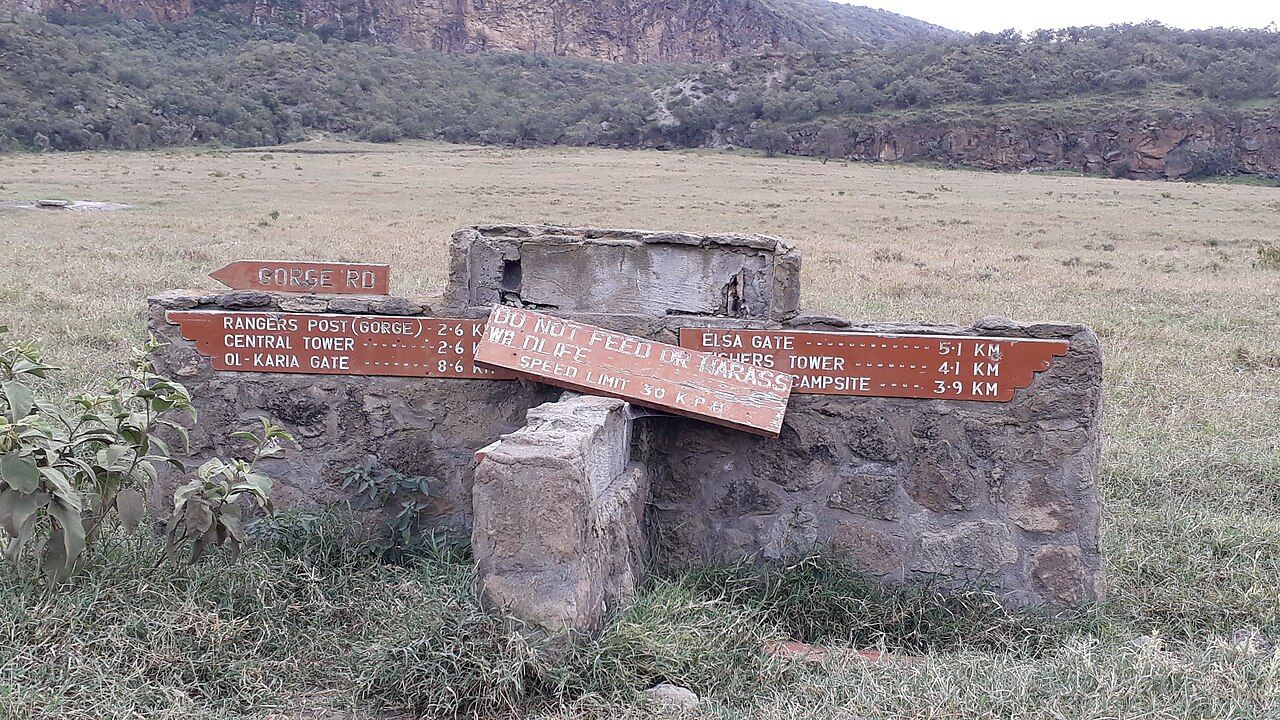
The gorge, the steam and Fischer's Tower
Near the entrance stands Fischer's Tower, a tall volcanic plug left behind after the softer rock around it wore away. It is named after Gustav Fischer, a German explorer who reached the area in the 1880s. Rock hyraxes live on its ledges, and climbers sometimes use it.
Further on, the Lower Gorge is a narrow slot carved into soft volcanic rock, with hot springs seeping from its walls. Walking it with a local guide is usual, and in places you scramble down steep sections. The gorge is also a channel for flash floods. Rain far upstream can send water through suddenly, and people have died there. Never enter in rain or when rain is likely, and follow the advice of guides and rangers.
Steam plumes rising above the park come from geothermal power stations in the Olkaria area. Kenya generates a large share of its electricity from this underground heat, and the pipes and plants are part of the view.
Mount Longonot
South-east of the lake, the cone of Mount Longonot rises from the valley floor, a dormant volcano protected as its own small national park. A steep path climbs to the crater rim, and a longer trail circles it, with views down into a forested crater and out over the lake and the Rift. The climb is dusty and exposed, so start early and carry plenty of water. Buffalo and other animals use the slopes, so stay alert on the trail.
Up the escarpment road
The road from Nairobi to Naivasha takes around two hours, depending on traffic on the escarpment. Naivasha is a natural stop on the way to the Masai Mara or to Lake Nakuru, an hour or so further north. For more on moving safely around wildlife, see our page on ways to go on safari.