
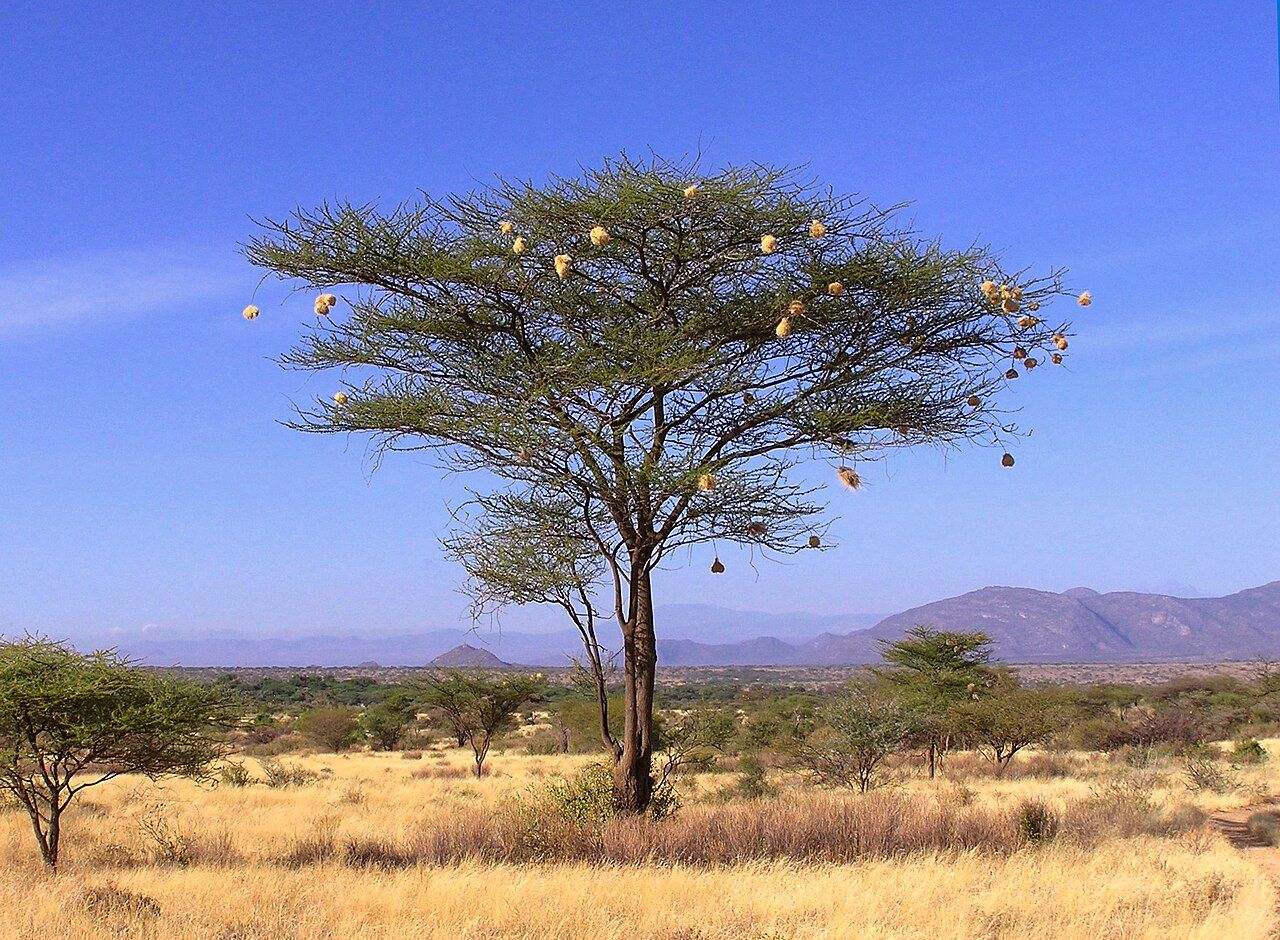
North of Mount Kenya the road drops off the highlands and the country changes within an hour. Wheat fields and cool forest give way to thorn scrub, red earth and bare rock, and the air gets hotter with every bend. By the time you reach Isiolo you are in a different Kenya: drier, emptier and home to animals you will not find in the Mara or at Amboseli. Samburu National Reserve lies a short drive further on, along the north bank of the Ewaso Ng'iro, with Buffalo Springs National Reserve across the river to the south and Shaba National Reserve to the east.
The three reserves are small by Kenyan standards, and wildlife moves between them as if the boundaries were not there. What makes the long drive worthwhile is the river. In a landscape that sees little rain for much of the year, the Ewaso Ng'iro is the line that everything depends on.
A river through dry country
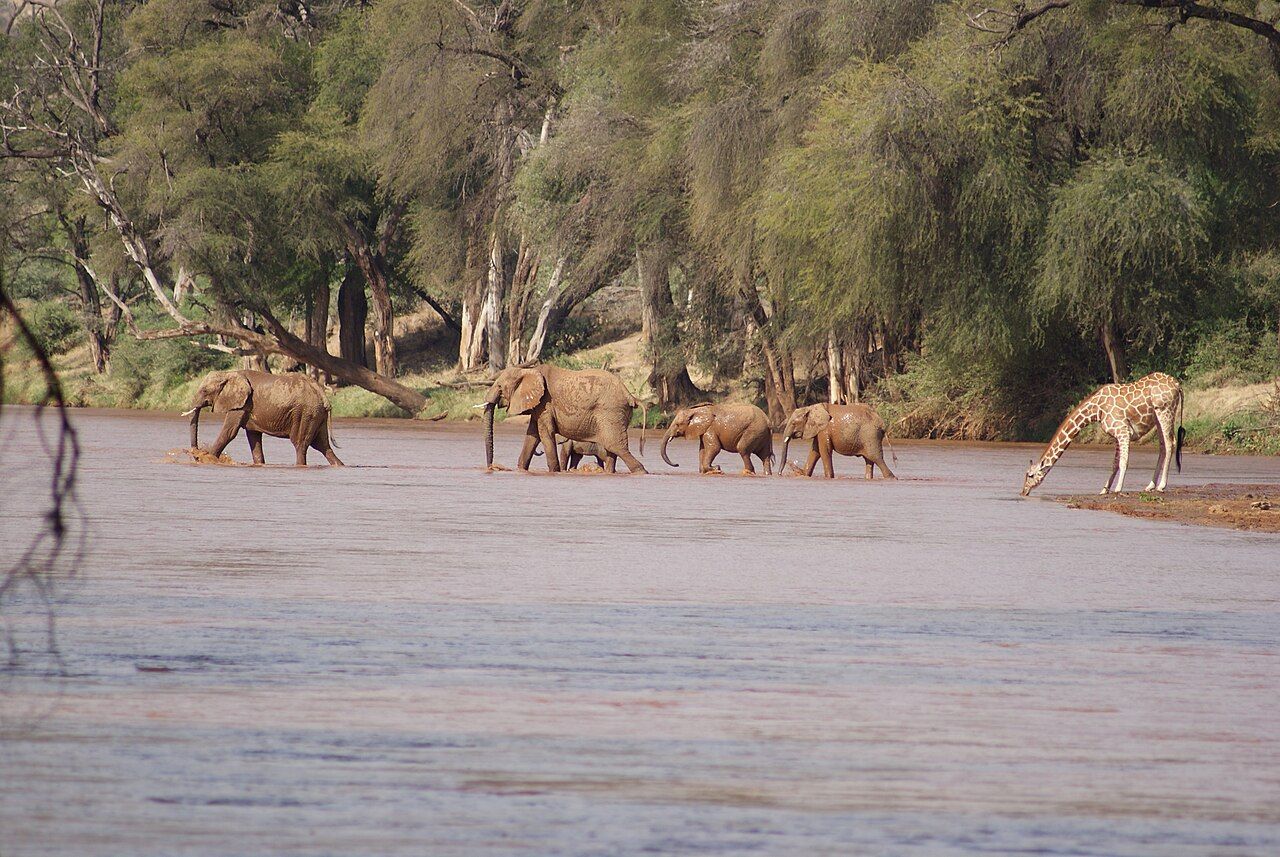
The Ewaso Ng'iro rises on the slopes of the Aberdares and Mount Kenya, crosses the Laikipia plateau and then turns east through Samburu towards the Lorian Swamp, where it fades into the ground. Its flow depends on rain far upstream and on how much water is taken out along the way. In a good year it runs brown and steady through the dry months. In a hard drought it can shrink to pools and sandbanks, and in the worst years it has stopped flowing altogether.
When the surface runs dry, elephants dig into the riverbed with their feet and trunks until water seeps up into the hole. Other animals drink from the same holes after them. It is one of the clearest ways to see how much the rest of the reserve leans on the largest animal in it.
Doum palms with forked trunks, tamarinds and tall acacias line both banks. This narrow strip of green is where you spend most of your time. Tracks follow the river in both directions, and from the higher ground you look across the water to herds coming down to drink. Late morning and midday are when elephant families most often cross, wading through the current with the smallest calves pressed between the adults.
The rains, usually in two spells around April and November, change the picture quickly. The river can rise fast after storms in the highlands, and floods have damaged buildings along the banks in past years. Within days the scrub turns green, animals spread out away from the water and game drives become more of a search than a wait.
The northern specials
Guides in the north often talk about a "Samburu five": five animals adapted to dry country that you are unlikely to see in the southern parks. They are the reason many people make the trip.
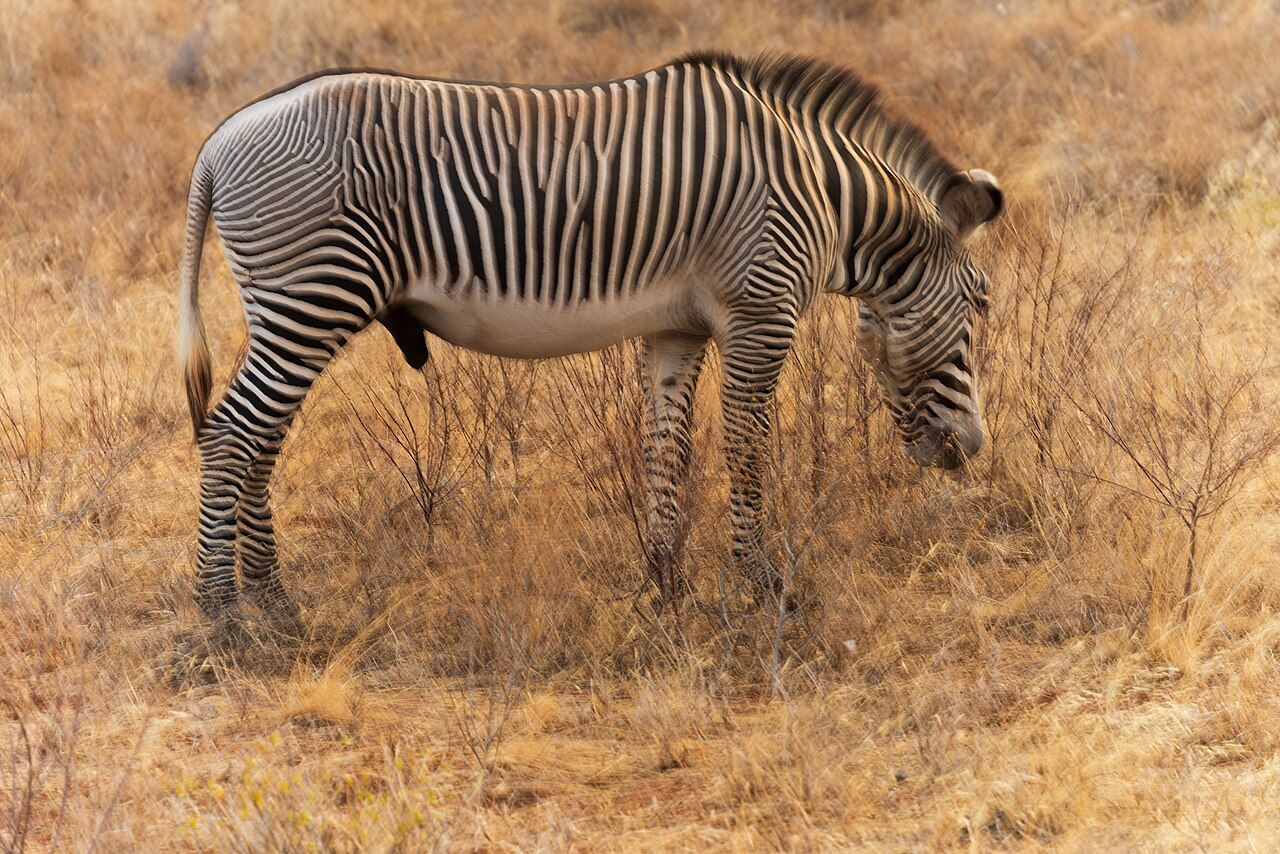
Grevy's zebra is the largest of the zebras, with narrow, closely set stripes, a white belly and broad, rounded ears. It is endangered, and most of the world's remaining population lives in northern Kenya, with a small number in Ethiopia. Next to the common plains zebra, which also lives here, the difference is easy to see once you know to look.
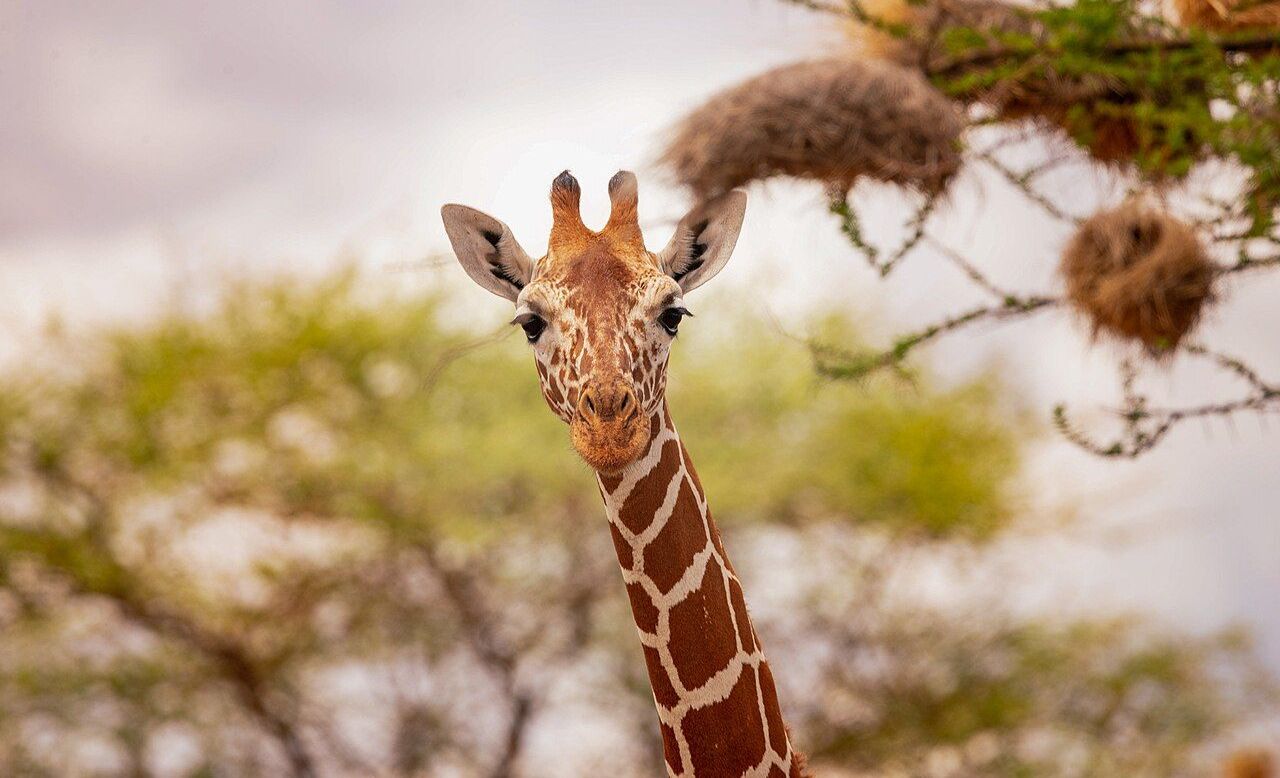
Reticulated giraffe carries large chestnut patches separated by thin, clean white lines, like a net laid over the body. The southern giraffes have ragged, star-shaped patches; this one looks almost drawn.
Gerenuk is a gazelle with a long neck and long legs that stands upright on its hind legs to browse leaves that other antelope cannot reach. It can go a long time without drinking, taking most of its water from the plants it eats.
Beisa oryx has long, straight horns and a sharply marked black and white face. Small groups stand in the open heat that sends most other animals into the shade.
Somali ostrich differs from the common ostrich by the blue-grey skin on the male's neck and thighs. Both kinds occur in the north, so the colour is worth checking.
Beyond the five, the river supports elephants, lions, leopards and cheetahs, and wild dogs pass through from time to time. Vulturine guineafowl, with cobalt-blue breasts and long striped feathers, run across the tracks in groups. Crocodiles lie on the sandbanks, and the riverine trees hold kingfishers, hornbills and sunbirds.
In a landscape that sees little rain for much of the year, the Ewaso Ng'iro is the line that everything depends on.
Samburu land and people
The reserve takes its name from the Samburu people, pastoralists who speak Maa, the same language family as the Maasai to the south. Families keep cattle, goats, sheep and, in the drier areas, camels, and move them across the land as grazing and water allow. The reserves are run by the county governments, and much of the surrounding land is community land, where several community conservancies now set aside grazing and wildlife areas and employ rangers from nearby villages.
Much of the wildlife of northern Kenya lives outside the reserves, on that community land, alongside livestock. Drought hits the herders as hard as it hits the animals, and competition for water and grazing can be intense in dry years. The conservancy model, with its own successes and its own disputes, is part of how the north is trying to manage both.
If you visit a village, remember it is someone's home rather than a show. Ask before you take any photograph of a person, accept a no without argument, and ask how any visitor fee is shared within the community. Beadwork sold on the spot is made by hand and is worth buying for its own sake, not as a souvenir of a performance.
Heat, light and how to spend a day
Samburu is hot. In the middle of the day the temperature often climbs past 30°C, the light flattens and most animals lie up in the shade. The rhythm of a day here follows that heat. Set out at first light, when the air is cool and predators are still moving. Return in the late morning, rest through the hottest hours, and go out again in the late afternoon until the gates close at dusk.
The exception is the river. Because elephants come down to drink and cross in the middle of the day, a spot on the bank with shade and a wide view can be worth the heat. Wear light long sleeves against the sun, and keep the vehicle's roof hatch partly closed when you are parked for a while.
Inside the reserves, keep to the tracks. The soil is thin, the vegetation recovers slowly and off-road driving scars the ground for years. Give animals space, particularly elephants with young calves, and do not crowd a predator with other vehicles. If you see a leopard in a riverside tree, a quiet wait at a distance usually shows you more than a close approach.
North through Isiolo
The main road north from Nairobi runs through Nanyuki and Isiolo and is tarred, and the drive takes roughly five to six hours depending on traffic and stops. Light aircraft also serve airstrips in and around the reserves. Many travellers combine Samburu with Mount Kenya and the Laikipia plateau on the way north, or continue to the quieter parks to the east.
The driest and most reliable months for game are roughly June to October and January to February, when animals gather along the river. The rains bring green scrub and newborn animals but make some tracks hard going, and the timing of both seasons shifts from year to year; the guide to Kenya's rains and dry seasons covers the pattern in more detail. Entry fees, opening hours and rules are set by the county governments that manage the reserves.
Northern Kenya covers a large area, and conditions differ from county to county. For how this dry, quiet country compares with the crowded plains of the Masai Mara, and for advice on vehicles and walking, see the pages on ways to go on safari.